



Brandon Mason
Phone
(917) 924-2145
Email
[email protected]

Flatiron and Union Square don't have the residential intimacy of the West Village or the singular cultural identity of Harlem. What they have is position: they sit at the hinge between downtown and Midtown, between the East Side and the West Side, between neighborhoods that traffic in history and neighborhoods that traffic in commerce.
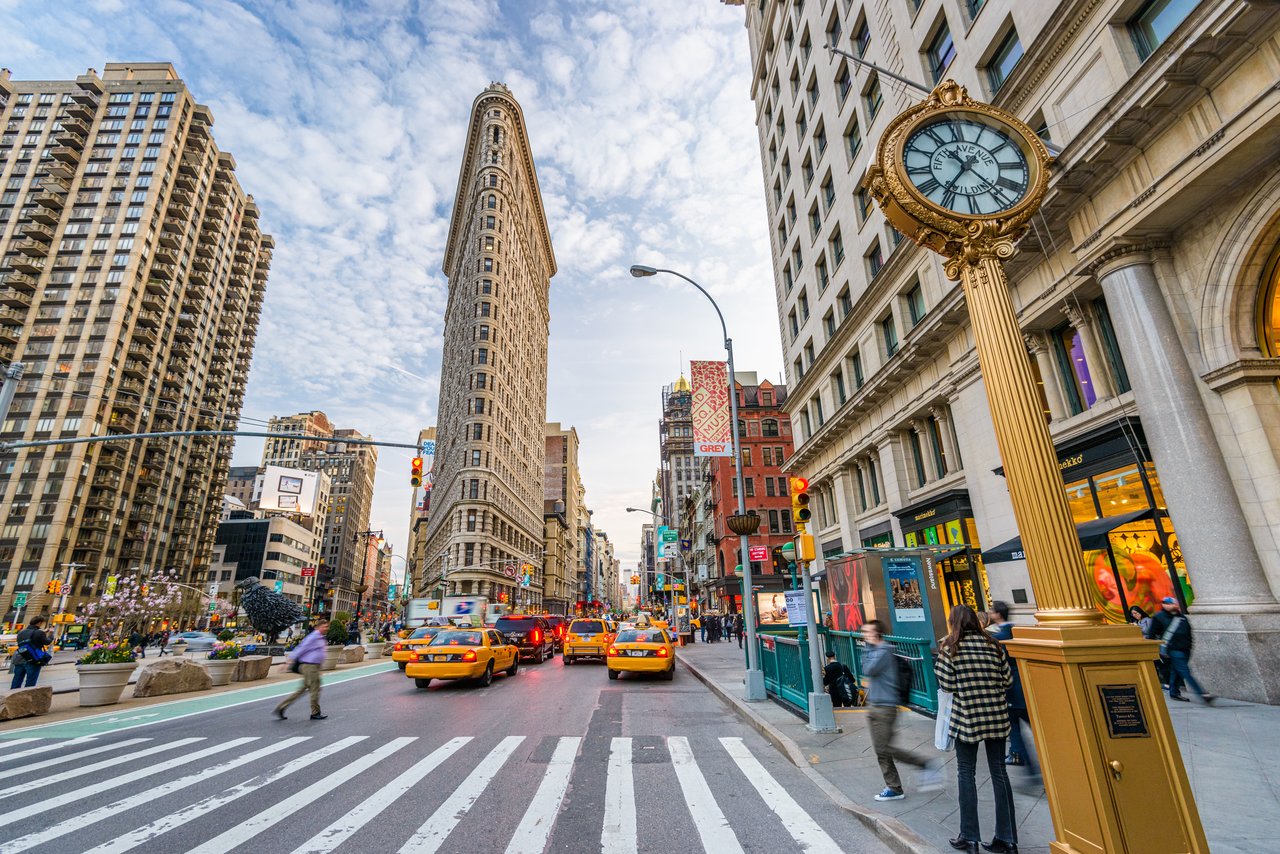


Flatiron and Union Square don't have the residential intimacy of the West Village or the singular cultural identity of Harlem. What they have is position: they sit at the hinge between downtown and Midtown, between the East Side and the West Side, between neighborhoods that traffic in history and neighborhoods that traffic in commerce.
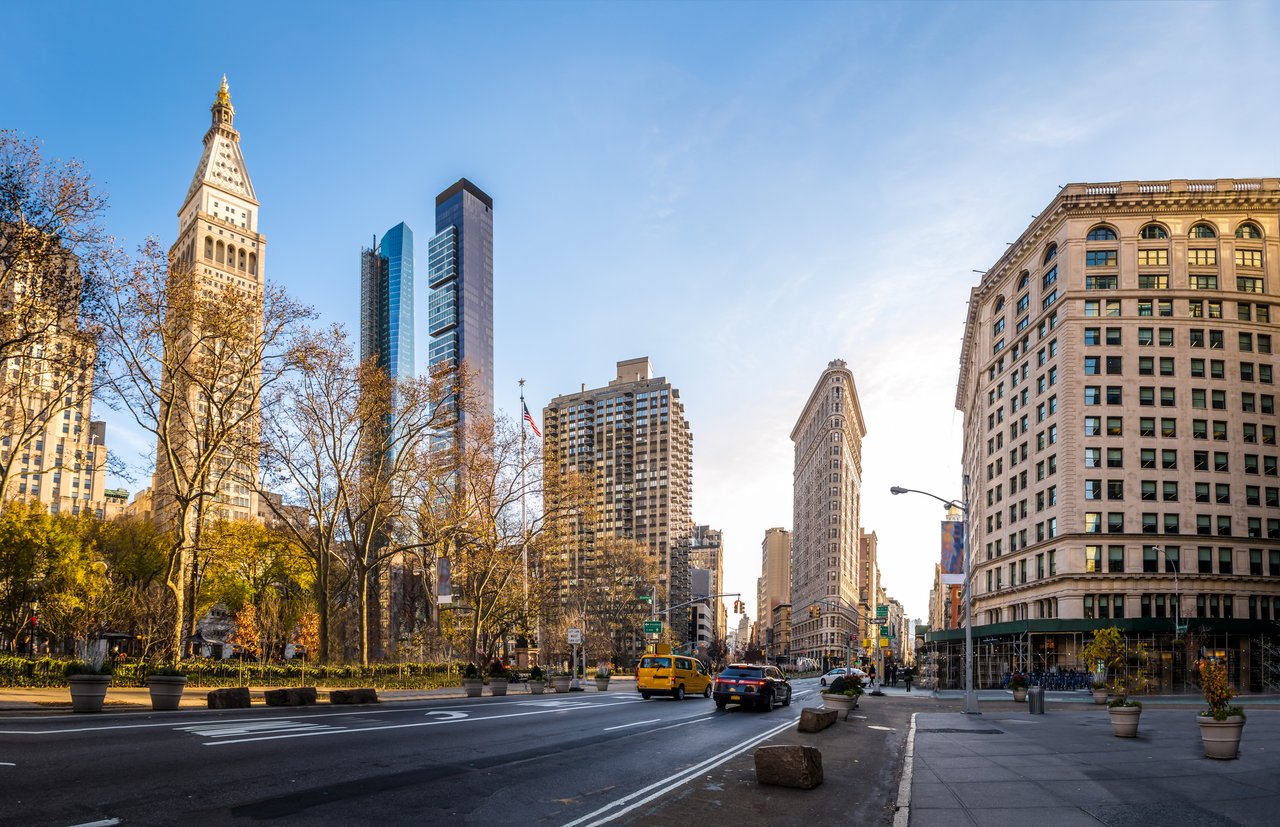
The Flatiron District occupies roughly the blocks between 20th and 30th Streets, from Sixth Avenue east to Park Avenue South, with Madison Square Park at its physical and psychological center. The neighborhood's name derives from the building that has stood at the intersection of Broadway, Fifth Avenue, and 23rd Street since 1902 — a 22-story, 285-foot triangular tower designed by Daniel Burnham that remains one of the most photographed structures in the world and one of the few buildings in New York that genuinely earns the attention paid to it.
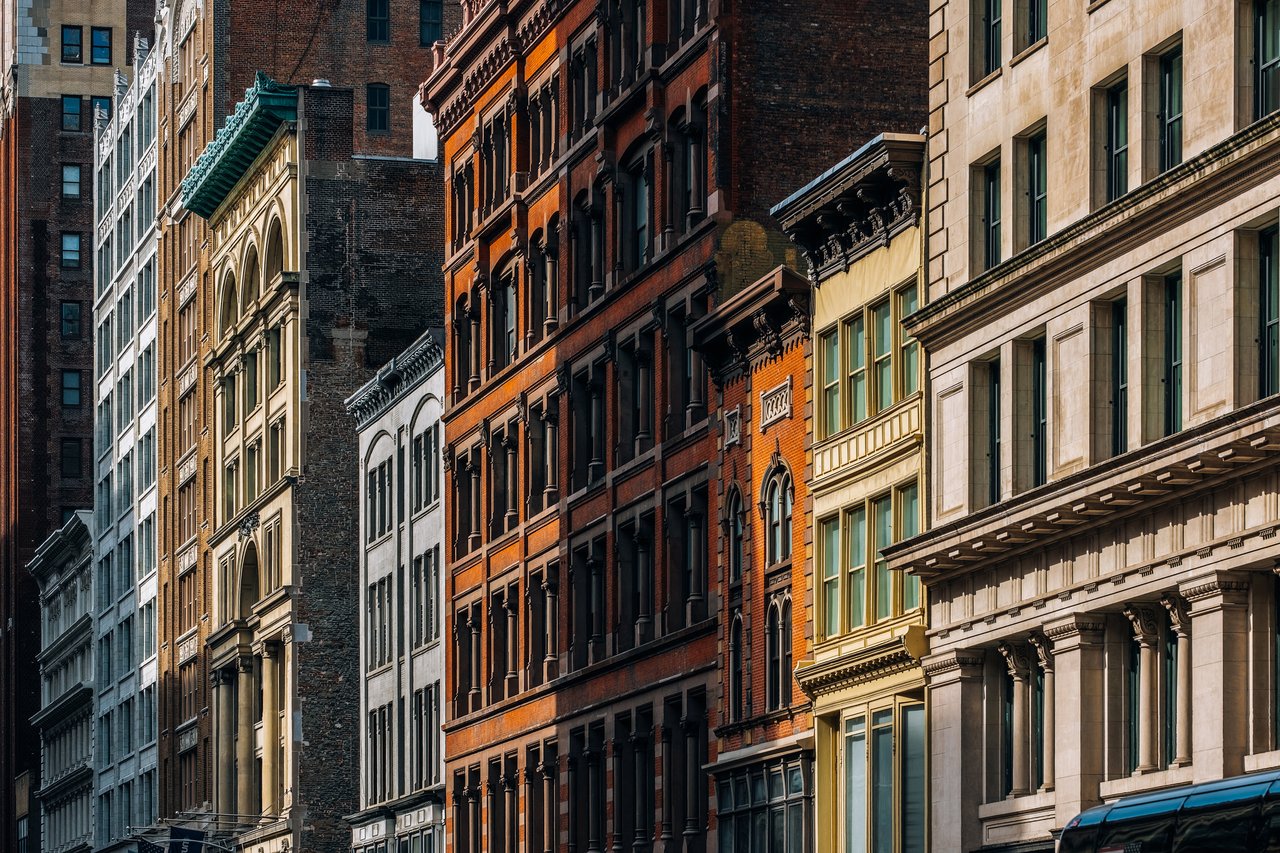
The visual environment here is exceptional. A historic district contains some of the city's most interesting commercial buildings, many of which served their life as part of the Gilded Age "ladies' mile" shopping destination. Beaux-Arts facades, cast-iron storefronts, ornate cornices — the blocks around Madison Square Park constitute a coherent architectural landscape that most Manhattan neighborhoods can't match. The New York Life Building, the Met Life Tower on Madison Avenue, the Appellate Courthouse on 25th Street: these are buildings with genuine civic ambition, and they set the streetscape's tone in a way that glass towers never quite do.
West 28th Street, known historically as Tin Pan Alley, was the birthplace of American popular music — where Irving Berlin, George Gershwin, and others composed songs that shaped the 20th century. The Landmarks Preservation Commission recently designated five buildings on the block in recognition of that history. Walking it today, between Sixth Avenue and Broadway, you're on ground where American pop music was invented.
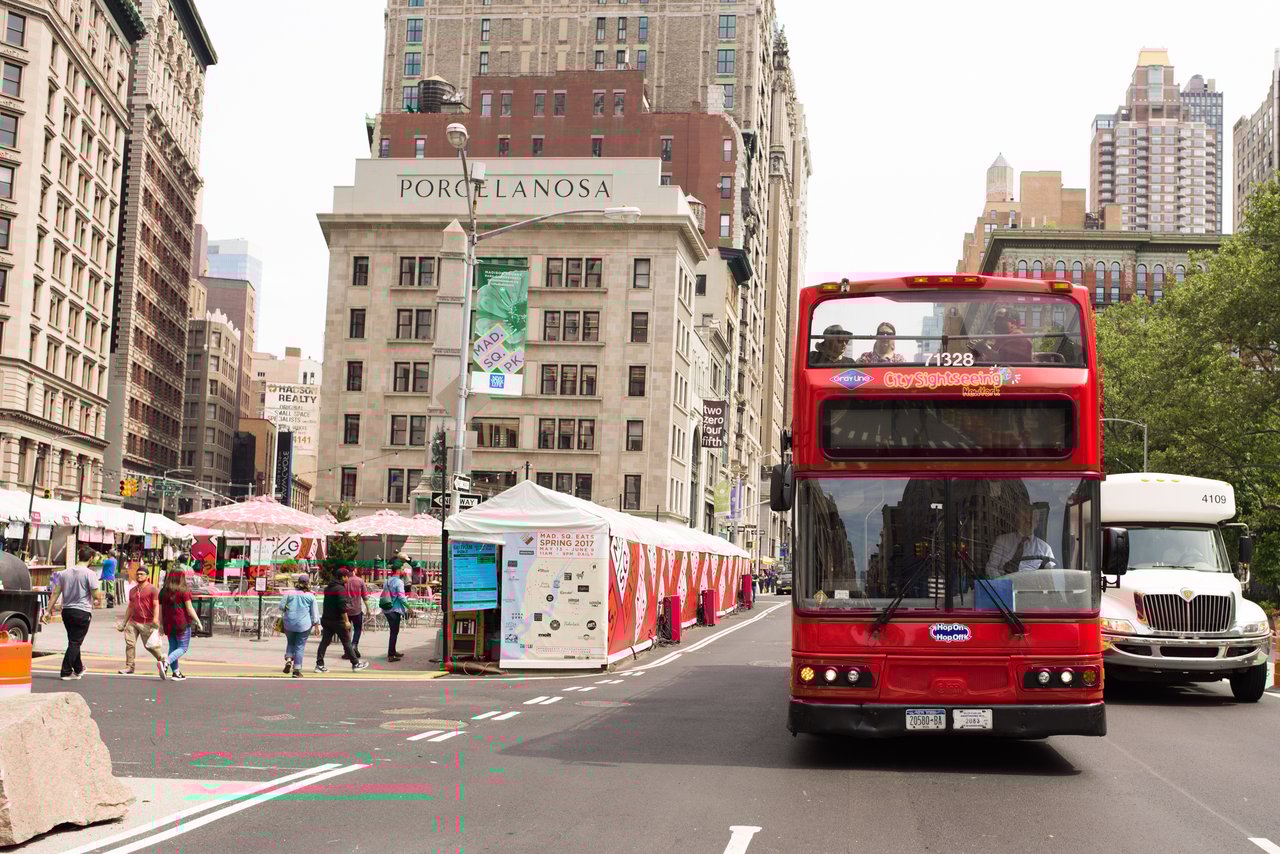
Tucked between 23rd and 26th Streets and hugged by Fifth and Madison Avenues, this seven-acre green space sits at the heart of the Flatiron District. It functions simultaneously as a public garden, a dog park, a playground, an outdoor gallery, and a gathering spot. The Madison Square Park Conservancy commissions rotating public art installations that have brought some of the most ambitious outdoor work in the city to this relatively small footprint — works by Kara Walker, Ai Weiwei, and dozens of others have been shown here over the years.
Shake Shack was born in 2000 as a hot dog cart in Madison Square Park, run out of Danny Meyer's Eleven Madison Park kitchen as part of an effort to revitalize the park. The cart grew in popularity, received a permanent kiosk permit in 2004, and became one of the fastest-growing restaurant chains in the country. The original location still operates in the park. On a warm afternoon, with the Flatiron Building visible to the south and the Met Life Tower to the north, it remains one of the better casual lunch spots in Manhattan.
The Flatiron dining scene runs from the genuinely exceptional to the reliably excellent, with very little in between that isn't worth your time.
Eleven Madison Park opened in 1998 under Danny Meyer and was transformed by chef Daniel Humm, who purchased it with Will Guidara in 2011. It holds three Michelin stars and has ranked on virtually every major list of the world's best restaurants. Humm transitioned the restaurant to an entirely plant-based menu in 2021, and as of late 2025 diners can also opt to include select animal proteins in certain courses. It occupies the ground floor of the Art Deco limestone tower at 11 Madison Avenue, with soaring ceilings and a room that feels appropriately scaled to the ambition of what's served.
Cote is a Michelin-starred Korean steakhouse in the neighborhood with a modern and sophisticated atmosphere. Gramercy Tavern, just east of the district's core, has been one of the most consistently rewarding restaurants in the city since it opened in 1994 — Danny Meyer again — and its tavern room remains one of the few places where a walk-in dinner feels genuinely unhurried.
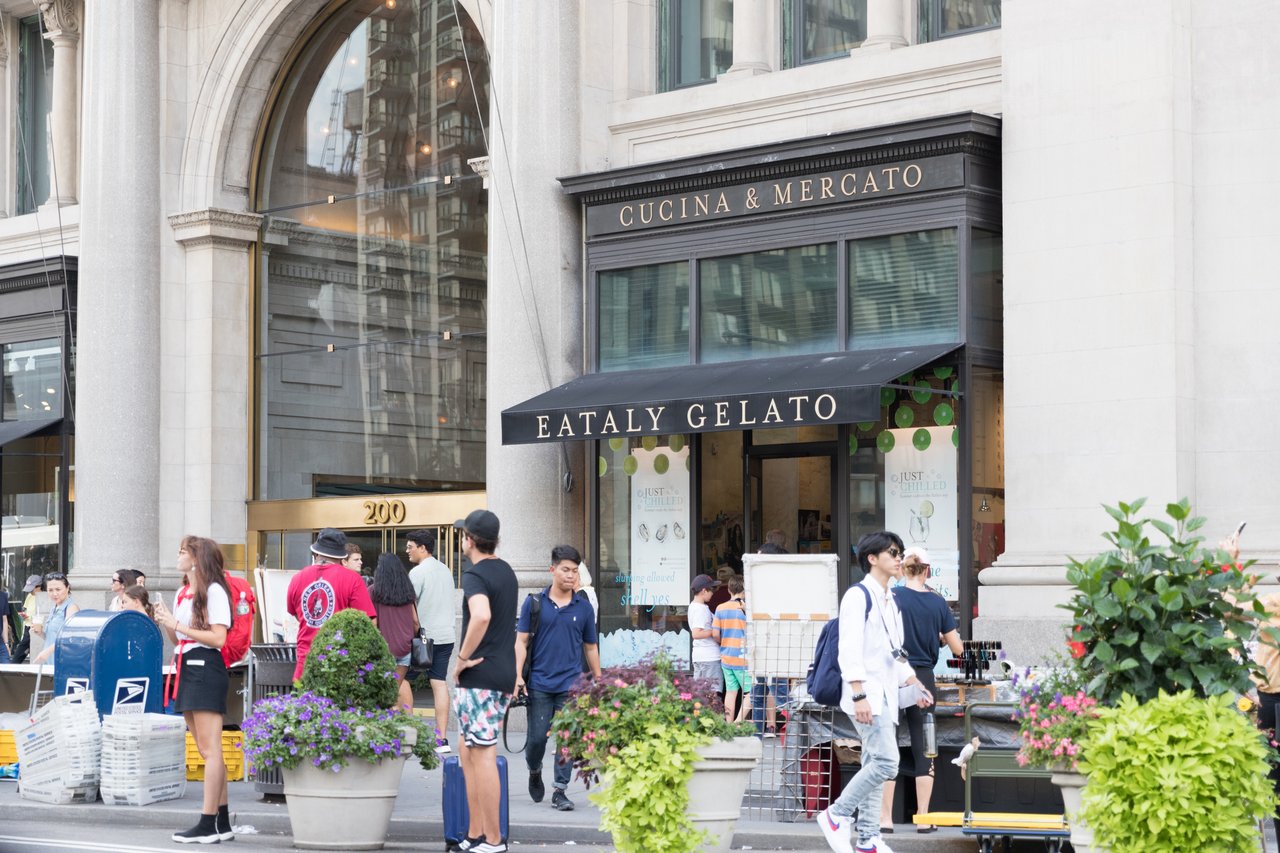
Eataly occupies an entire building on Fifth Avenue at 23rd Street — a lively Italian marketplace that got its start in Italy in 2007 in an old vermouth factory. Multiple restaurants, counters, and a grocery market occupy its floors, and the rooftop Serra by Birreria changes its concept seasonally. As a resident, it functions as both a destination and a pantry.
The blocks immediately north of Madison Square Park — roughly 25th to 30th Streets — carry the neighborhood designation NoMad (North of Madison Square Park), and they've developed a distinct identity around hotel bars, design showrooms, and a density of thoughtful restaurants. Flatiron and NoMad combined are home to no fewer than eight Michelin-starred restaurants. The design district on this stretch of Broadway and Sixth Avenue draws trade professionals and design-minded residents in roughly equal measure.
Union Square's convergence of the 4, 5, 6, L, N, Q, R, and W trains makes it one of Manhattan's best-connected neighborhoods, enabling easy travel anywhere in the city. The Flatiron's position between Union Square to the south and Penn Station and 28th Street stops to the north means that most transit options are within a few blocks in any direction. The neighborhood is also exceptionally walkable — Chelsea, the West Village, Gramercy, and Murray Hill are all reachable on foot.
Union Square occupies the blocks around the park of the same name, centered on 14th Street between University Place and Irving Place, and it functions less as a residential neighborhood in the traditional sense than as a confluence — of transit lines, of political history, of food culture, of retail, and of daily foot traffic that makes it one of the most animated public spaces in New York on any given day.
Union Square Park was founded in 1839, redesigned in 1872 by Frederick Law Olmsted and Calvert Vaux, and has hosted too many community events to count — from the first Labor Day parade in 1882 to workers' rallies in the 1930s to the first Earth Day in 1970. The park has always been a staging ground for civic life. Today, it remains the city's essential gathering spot for activists and organizers, and a nexus point between the East Village, Flatiron, and Gramercy neighborhoods. Statues of George Washington, Abraham Lincoln, Mohandas Gandhi, and the Marquis de Lafayette anchor its perimeter.
In the immediate aftermath of September 11, 2001, Union Square became the city's spontaneous memorial — thousands of people gathered here, leaving candles, flowers, photographs, and handwritten notes in a display of collective mourning that lasted for weeks. That history is part of the park's character in a way that doesn't diminish.
The Union Square Greenmarket began in 1976 with just a few farmers and has grown into a market where, in peak season, 140 regional farmers, fishers, and bakers sell their products to a dedicated legion of city dwellers. It operates four days a week — Monday, Wednesday, Friday, and Saturday — year-round, rain or shine. The 14th Street Union Square subway station sees 58,000 average daily riders, with a 13% increase on Greenmarket days.
For residents, the Greenmarket isn't a weekend destination — it's a functional part of how you shop. The selection of heritage meats, farmstead cheeses, heirloom produce, artisan breads, wine, cider, and cut flowers is genuinely unmatched by any farmers' market in the city. Food & Wine ranked the Union Square Greenmarket the number one must-visit farmers' market in the country. The holiday market that takes over the park from late November through December draws two million visitors and is consistently ranked the best in the United States.
Some of the most established restaurants in the area include Union Square Cafe, Gramercy Tavern, L'Express, and Rosa Mexicano. Union Square Cafe, which Meyer relocated a few blocks from its original location after losing its lease in 2016, remains one of the benchmarks for seasonal American cooking in the city — warm, ingredient-focused, and without the formality that sometimes accompanies its caliber.
Union Square has attracted 43 new businesses in 2024, 60% of which are food and beverage related, with a 7% increase in restaurant spending year over year. The commercial district around the park has recovered from pandemic-era vacancy more robustly than much of Manhattan, with ground-floor occupancy reaching 88.5%.
The Strand Bookstore at the corner of 12th Street and Broadway — 18 miles of books on four floors — is one of the essential New York City institutions, and its presence anchors Union Square's literary and intellectual identity. The park hosts free movies and activities each summer through the Summer in the Square series.
Union Square has arguably the best transit situation of any neighborhood in Manhattan. The 4, 5, 6, L, N, Q, R, and W trains all converge at the 14th Street station, connecting directly to the East Side, the West Side, Brooklyn, the Bronx, and Queens. The ability to reach virtually any point in the city without a transfer, and to do so quickly, is the practical foundation on which the neighborhood's appeal rests.
There's plenty to do around Flatiron / Union Square, including shopping, dining, nightlife, parks, and more. Data provided by Walk Score and Yelp.
Explore popular things to do in the area, including Mo Sportswear, Lflxdly, and All State Global Karate-DO.
| Name | Category | Distance | Reviews |
Ratings by
Yelp
|
|---|---|---|---|---|
| Shopping | 0.24 miles | 0 reviews | 0/5 stars | |
| Active | 0.15 miles | 0 reviews | 0/5 stars | |
| Active | 0.19 miles | 0 reviews | 0/5 stars | |
| Active | 0.21 miles | 0 reviews | 0/5 stars | |
| Nightlife | 0.37 miles | 2 reviews | 1/5 stars | |
| Nightlife | 0.38 miles | 6 reviews | 4.8/5 stars | |
| Beauty | 0.29 miles | 0 reviews | 0/5 stars | |
| Beauty | 0.31 miles | 0 reviews | 0/5 stars | |
| Beauty | 0.33 miles | 0 reviews | 0/5 stars | |
| Beauty | 0.34 miles | 0 reviews | 0/5 stars | |
| Beauty | 0.36 miles | 0 reviews | 0/5 stars | |
|
|
||||
|
|
||||
|
|
||||
|
|
||||
|
|
||||
|
|
18,585 people live in Flatiron / Union Square, where the median age is 38 and the average individual income is $179,368. Data provided by the U.S. Census Bureau.
Total Population
Median Age
Population Density Population Density This is the number of people per square mile in a neighborhood.
Average individual Income
With over a decade of expertise in Manhattan and Brooklyn, Brandon Mason looks forward to providing you with a real estate experience that is second to none. Feel free to explore our website, and contact Brandon with any questions you may have.
Let's Connect