





Brandon Mason
Phone
(917) 924-2145
Email
[email protected]

Bed-Stuy suits people who want community, architectural character, and a neighborhood that feels like it has been somewhere and knows what it is. Bushwick suits people who want creative energy, nightlife infrastructure, and a neighborhood that is still in the process of becoming something — with all the excitement and uncertainty that implies.


They share a border along Broadway. Their subway lines overlap. In real estate listings, the edges blur. But Bed-Stuy and Bushwick are genuinely distinct places with different histories, different feels, and different reasons to live there. Bed-Stuy suits people who want community, architectural character, and a neighborhood that feels like it has been somewhere and knows what it is. Bushwick suits people who want creative energy, nightlife infrastructure, and a neighborhood that is still in the process of becoming something — with all the excitement and uncertainty that implies.
Bed-Stuy represents something of a paradox: one of the largest neighborhoods in Brooklyn, practically a city within the borough, yet it offers an intimate, slow-paced, small-town vibe. A sense of community pervades nearly every block. This is what residents love the most about Bed-Stuy.
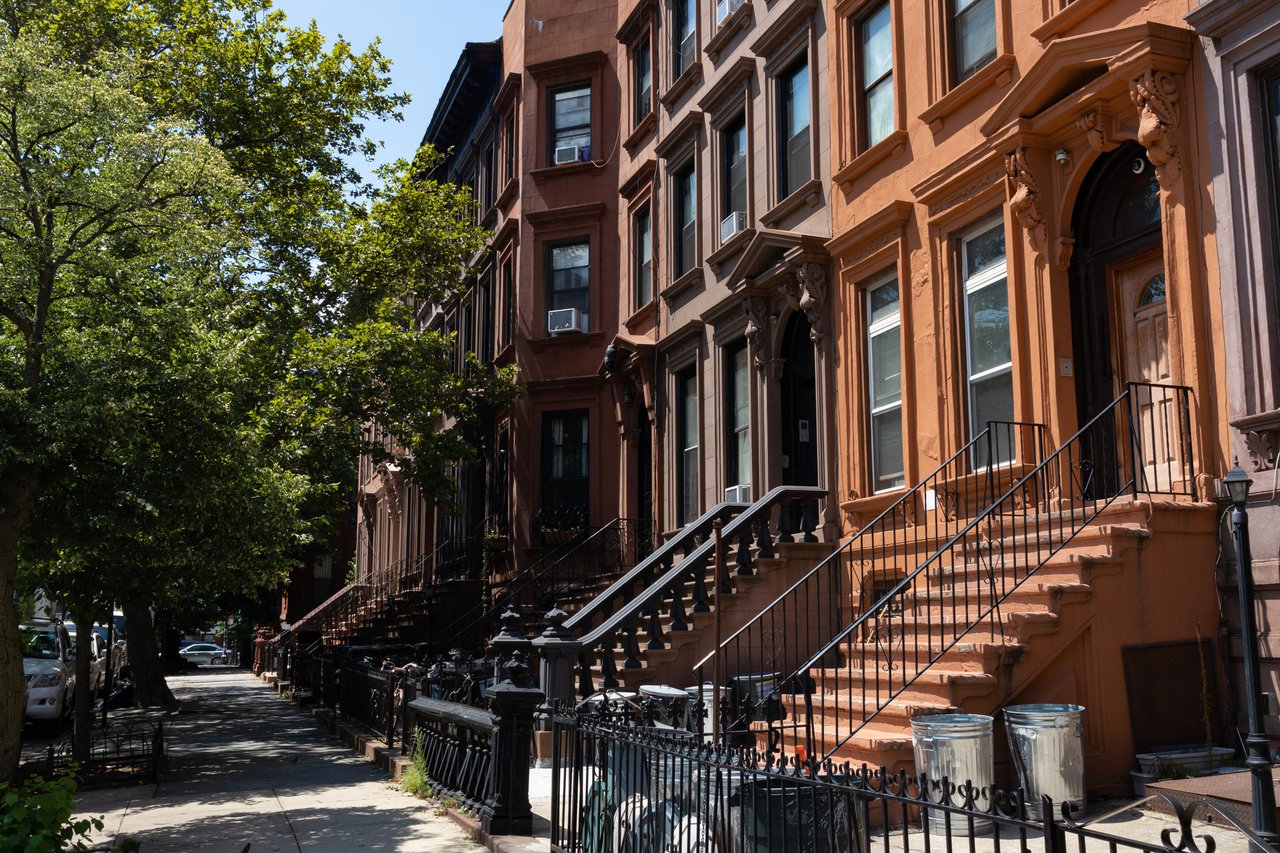
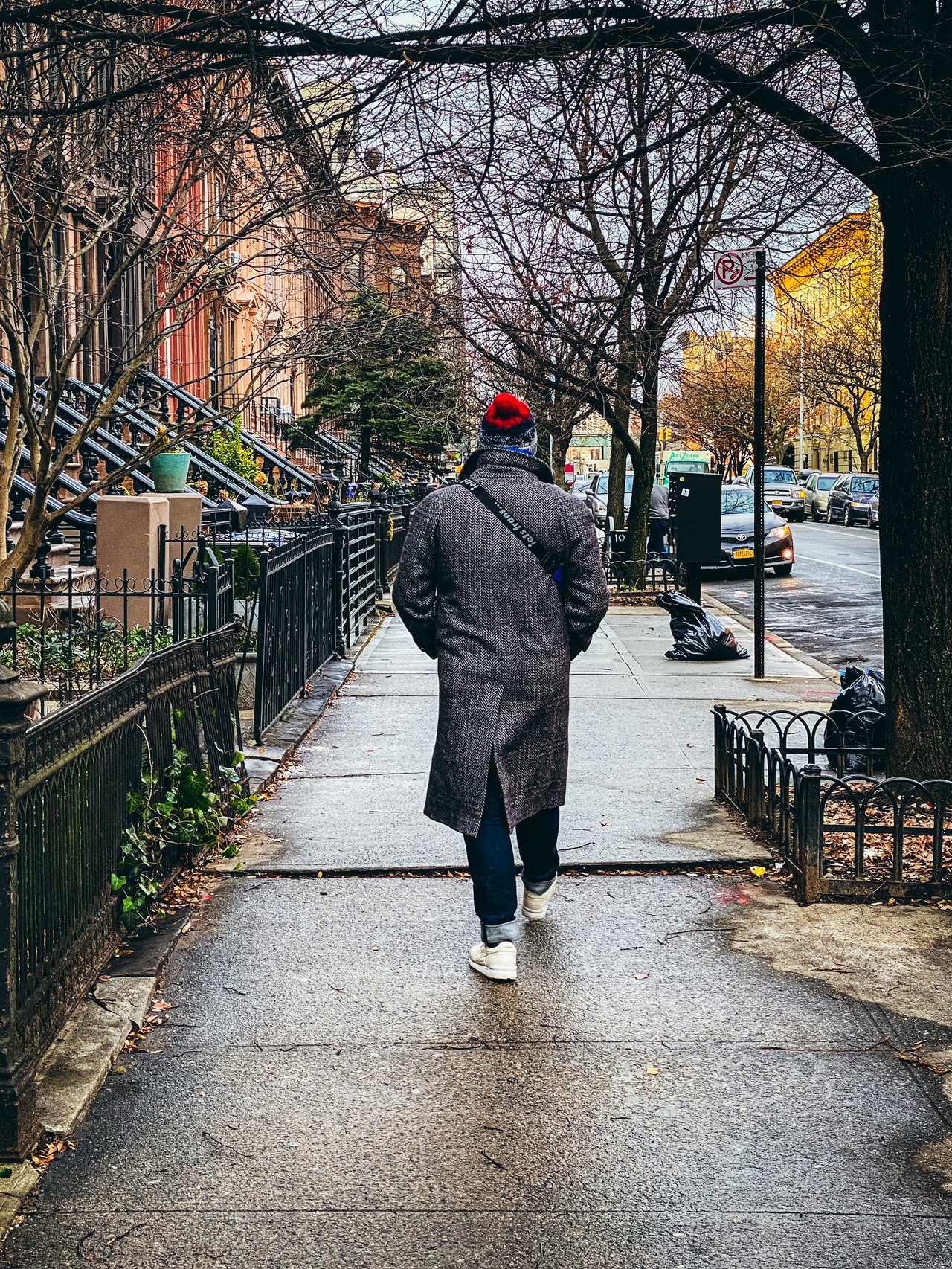
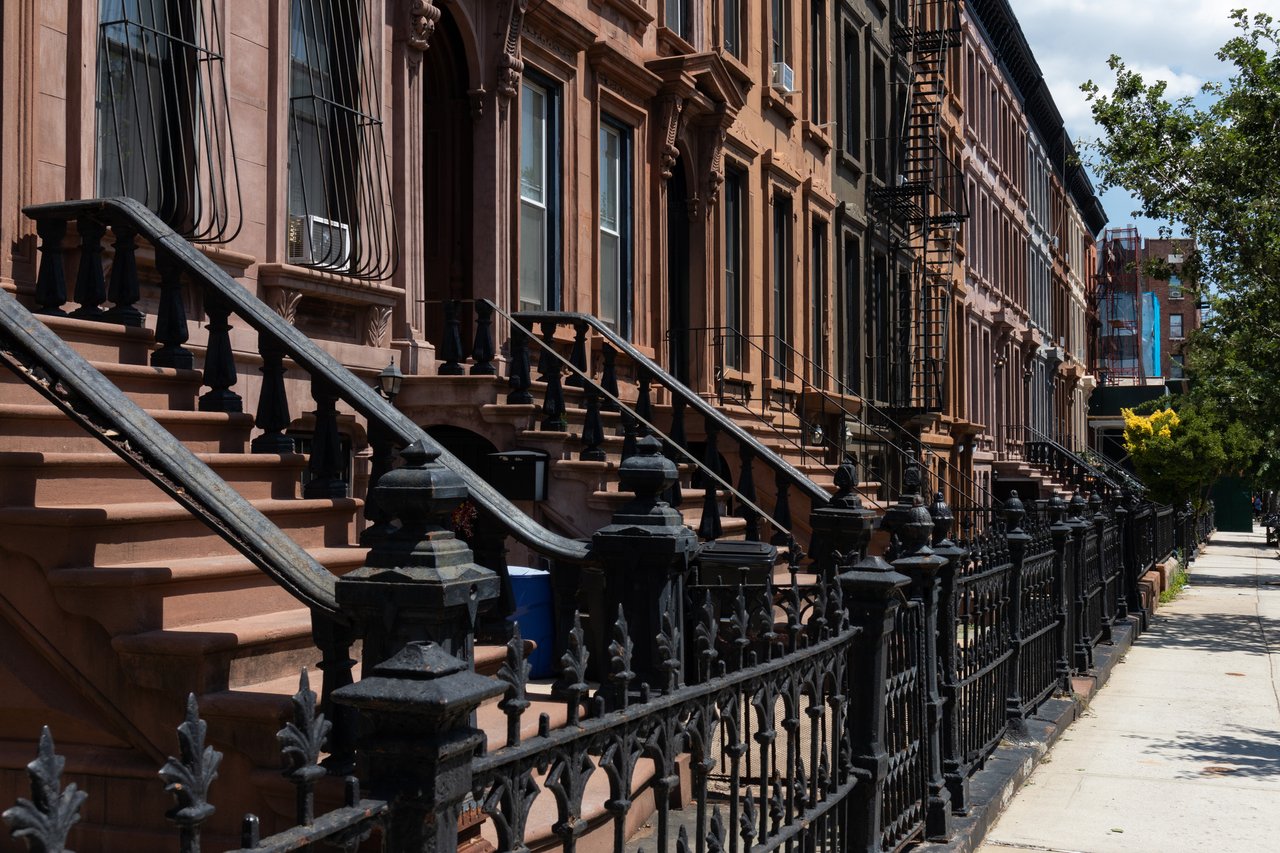
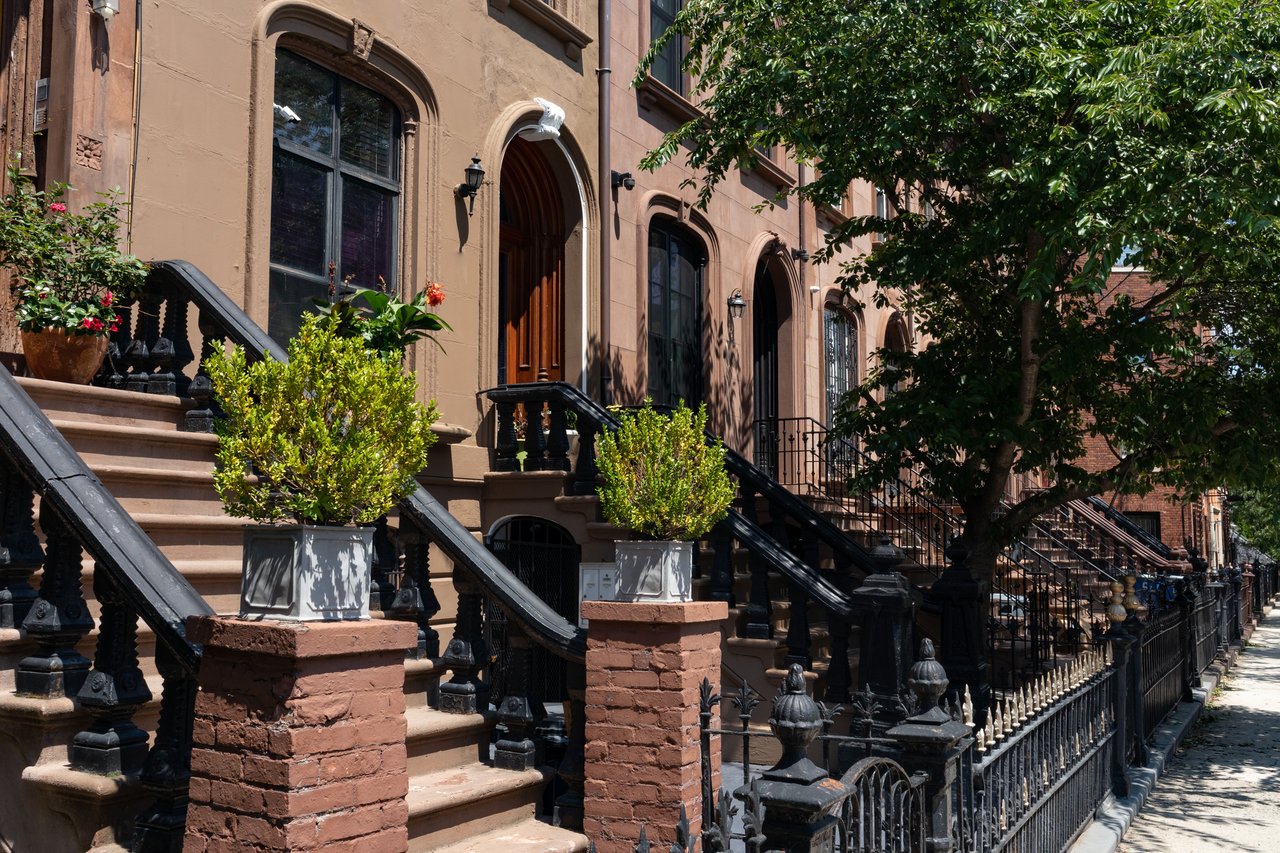
In 2019, Bed-Stuy was reported to have the largest collection of preserved Victorian architecture in the United States, with over 8,000 buildings built before 1900. The stoops, the arabesque masonry, the turrets, the wrought-iron fences — much of it untouched for well over a century. MacDonough Street, Decatur Street, and Bainbridge Street form the Stuyvesant Heights Historic District, one of the major stops on Brooklyn's brownstone belt, with homes replete with details like bowed windows, animal grotesqueries, and wide stoops. Walking these blocks on a weekend morning, when neighbors are on those stoops and kids are on the sidewalks, gives you something that more expensive neighborhoods in Brooklyn can't manufacture.
Restoration Plaza, at the heart of the neighborhood, is a hub for arts, culture, and commerce, hosting performances, art exhibits, and events that celebrate the neighborhood's heritage. Herbert Von King Park — designed by Frederick Law Olmsted and Calvert Vaux — serves as the neighborhood's de facto town square, with an outdoor amphitheater that hosts free concerts and community events through the summer.
The food scene has evolved considerably over the past decade without losing the neighborhood feel. Peaches has been the anchor for Southern comfort food — shrimp and grits, fried chicken — for years, with multiple locations on both sides of the neighborhood. Saraghina offers wood-fired pizza and fresh pasta in a garden setting that feels genuinely Roman. L'Antagoniste brings serious French bistro cooking — duck confit, steak frites — to a room that seats maybe thirty people. Dolores, a Mexico City-inspired taverna from the Winona's team, has become one of the borough's most talked-about openings, with cochinita pibil and excellent cocktails in a room that packs out most nights.
Bar LunÀtico blends live music and small plates for a rotating lineup of performances that feels like the neighborhood's living room. For wine, a local shop has built a following around its selection of Black-owned labels. For coffee, Stonefruit Espresso and Passionfruit are both neighborhood institutions that happen to be excellent.
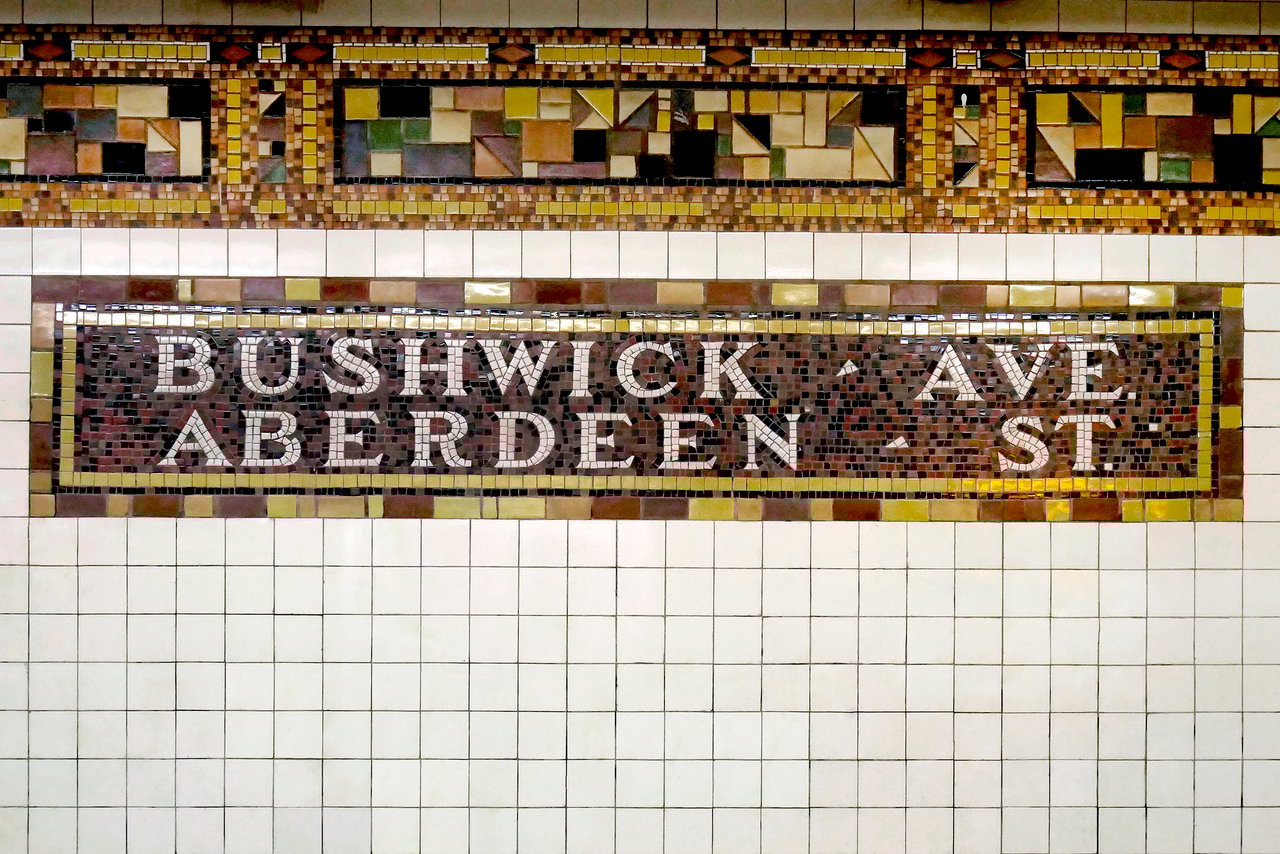
The A express and C local trains run beneath Fulton Street to the south; the J local and Z express stop along Broadway to the north and east. The G train serves the western edge. The commute to Manhattan is straightforward, and in summer, the A provides a direct connection to the Rockaways.
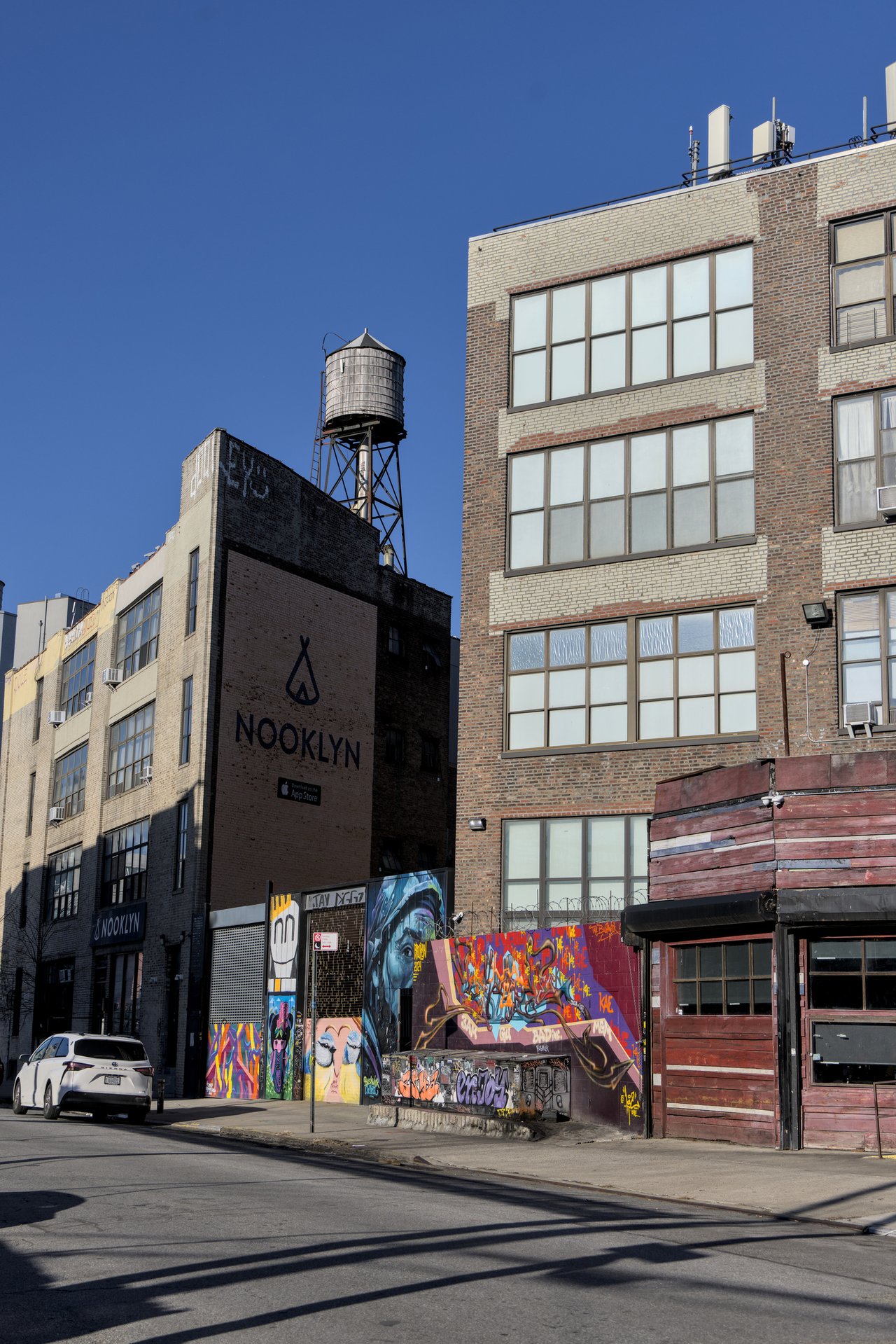
Where Bed-Stuy evolved over more than a century, Bushwick's current identity is largely a product of the last two decades. Bushwick is recognizable for its industrial spaces, adopted as artist studios in the early 2000s. Converted warehouses mix with low-rise condo buildings and rowhouses, and street art is abundant. That industrial-to-creative pipeline gave the neighborhood its character, and the character has caused the neighborhood to become more visible.
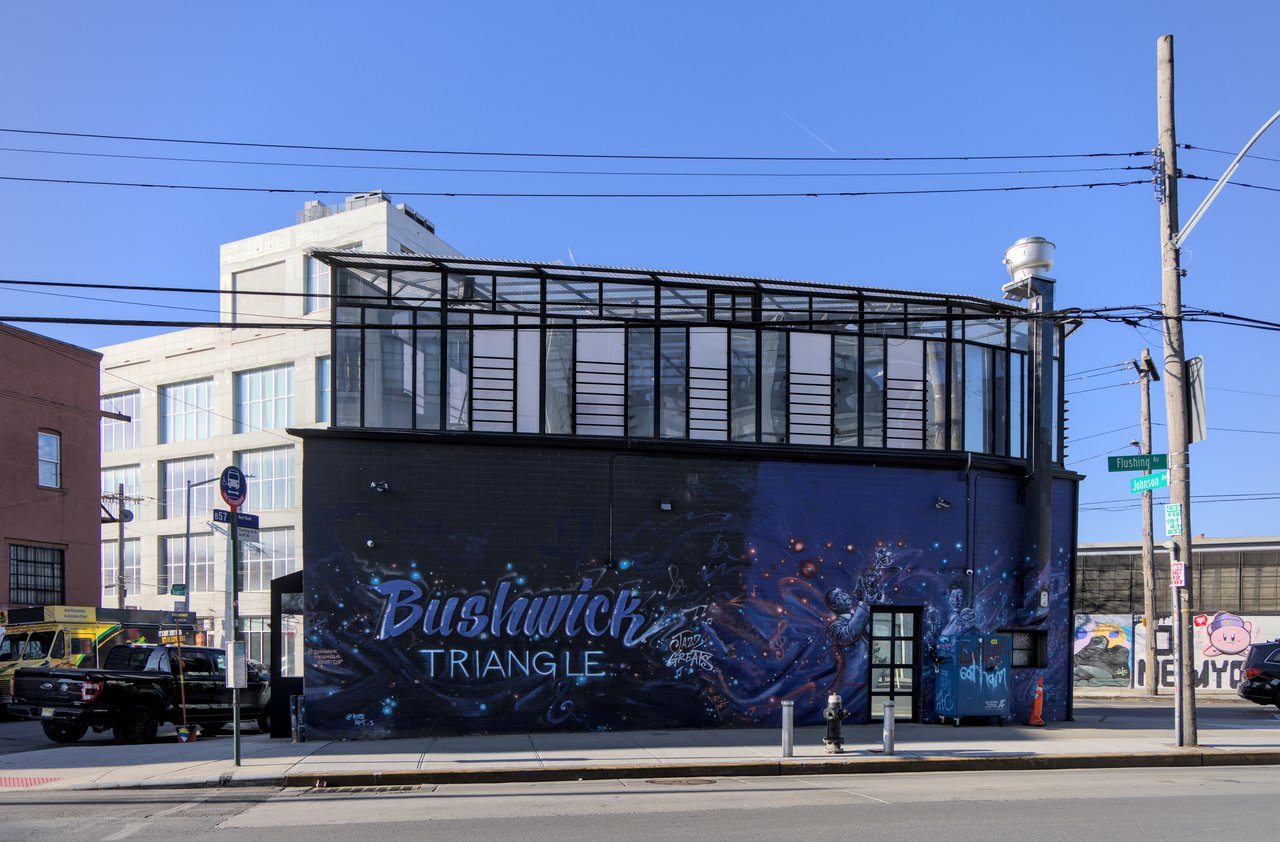
The Bushwick Collective functions as an open-air gallery, covering block after block with murals by local and international artists. It's a dynamic collection — walls get repainted, new artists rotate through, and the cumulative effect is a neighborhood that looks different every year. The annual Bushwick Collective Block Party draws thousands. Bushwick Open Studios, which takes place every spring, opens hundreds of artist workspaces to the public.
Bushwick's nightlife is genuinely singular,. Elsewhere is the three-floor club venue that regularly hosts some of the best DJs in the world and opens its roof during summer. House of Yes is a late-night venue built around performance, circus artists, aerialists, and themed nights where the crowd is as much the spectacle as what's on stage. Nowadays, further east, occupies a sprawling outdoor space that functions as much as a park by day as a club by night.
Roberta's Pizza put Bushwick on the culinary map and remains the neighborhood's most famous restaurant, serving Neapolitan-style pies from a location that has expanded from a single room into a full compound with a garden and a radio station. The neighborhood around it has developed steadily. L'imprimerie is a French bakery on the eastern side of the neighborhood that draws a loyal following for its croissants and naturally leavened bread.
Bushwick retains a grittier vibe than many other parts of Brooklyn, with more of a cool factor rooted in experimental art, thought-provoking street murals, and unpretentious bars and music venues. If you want proximity to Manhattan with a creative, late-night, art-forward community around you, and you're willing to trade the brownstone quietude of Bed-Stuy for something rawer and louder, Bushwick delivers.
The L train serves the neighborhood at Jefferson, DeKalb, and Morgan stops, connecting to Manhattan in 30 to 40 minutes from Midtown. The J, M, and Z trains run along Broadway on the neighborhood's eastern edge. The L's reliability has improved since its shutdown-era repairs, and for residents near the western end of the neighborhood, the commute to Lower Manhattan is among the faster options in Brooklyn.
There's plenty to do around Bed-Stuy / Bushwick, including shopping, dining, nightlife, parks, and more. Data provided by Walk Score and Yelp.
Explore popular things to do in the area, including Esfam A M Alzendani, Urban Sports & Cultural Center, and Young Gifted Athletes.
| Name | Category | Distance | Reviews |
Ratings by
Yelp
|
|---|---|---|---|---|
| Dining | 0.68 miles | 0 reviews | 0/5 stars | |
| Active | 0.65 miles | 0 reviews | 0/5 stars | |
| Active | 1.13 miles | 0 reviews | 0/5 stars | |
| Beauty | 0.27 miles | 0 reviews | 0/5 stars | |
| Beauty | 0.33 miles | 0 reviews | 0/5 stars | |
| Beauty | 0.34 miles | 0 reviews | 0/5 stars | |
| Beauty | 0.61 miles | 0 reviews | 0/5 stars | |
| Beauty | 0.62 miles | 0 reviews | 0/5 stars | |
| Beauty | 0.62 miles | 0 reviews | 0/5 stars | |
| Beauty | 0.62 miles | 0 reviews | 0/5 stars | |
| Beauty | 0.62 miles | 0 reviews | 0/5 stars | |
| Beauty | 0.62 miles | 0 reviews | 0/5 stars | |
| Beauty | 0.62 miles | 0 reviews | 0/5 stars | |
| Beauty | 0.62 miles | 0 reviews | 0/5 stars | |
| Beauty | 0.75 miles | 0 reviews | 0/5 stars | |
| Beauty | 0.9 miles | 0 reviews | 0/5 stars | |
|
|
||||
|
|
||||
|
|
||||
|
|
||||
|
|
||||
|
|
200,499 people live in Bed-Stuy / Bushwick, where the median age is 35 and the average individual income is $47,451. Data provided by the U.S. Census Bureau.
Total Population
Median Age
Population Density Population Density This is the number of people per square mile in a neighborhood.
Average individual Income
With over a decade of expertise in Manhattan and Brooklyn, Brandon Mason looks forward to providing you with a real estate experience that is second to none. Feel free to explore our website, and contact Brandon with any questions you may have.
Let's Connect