

Brandon Mason
Phone
(917) 924-2145
Email
[email protected]

The result today is a picturesque urban destination that summons the grandiosity of the past.
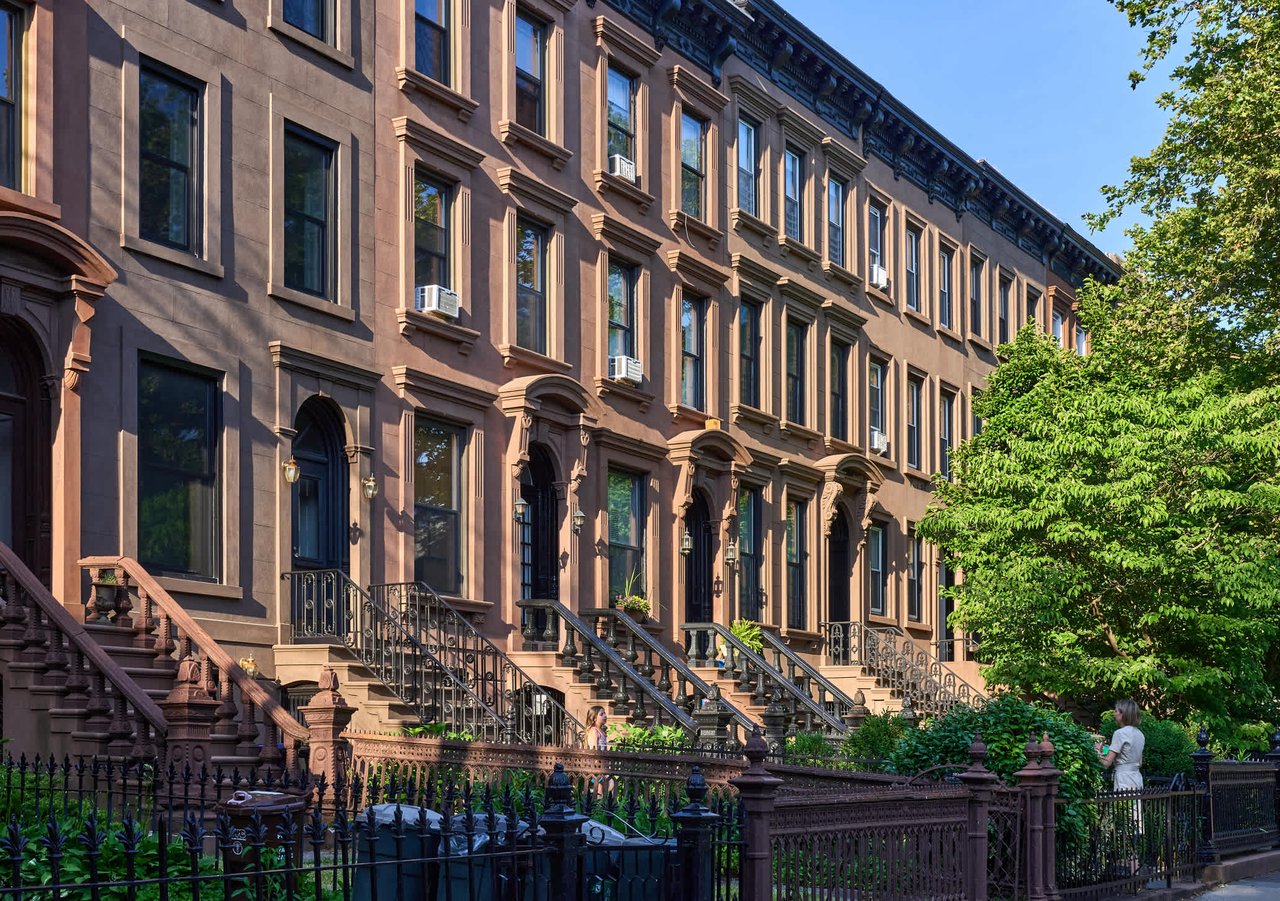
Carroll Gardens' mid-19th century brownstones feature deep front yards — a design artifact of the neighborhood's original 1846 street plan, laid out around Carroll Park and set back from the sidewalk to create the front gardens that give the neighborhood its name. In most of Brooklyn, the brownstone stops at the stoop. Here, there's a yard between the house and the street, often planted, fenced with wrought iron, and maintained with the kind of attentiveness that signals long-term ownership rather than recent arrival. Walking these blocks in spring, when the front gardens are in bloom and the light is coming through the trees at the right angle, is one of the better things Brooklyn offers.
Carroll Gardens and its centerpiece Carroll Park were named in honor of Charles Carroll in 1853 for his patriotic service during the Revolutionary War — the future Founding Father and only Roman Catholic signer of the Declaration of Independence led his Maryland Regiment in a raid against the British along the Gowanus Creek during the Battle of Long Island.
The neighborhood's cultural identity was shaped by what came after: Carroll Gardens was home to many Italian immigrants, mostly from Sicily and southern Italy, coming to Brooklyn in the late 1800s and early 1900s, taking work in the nearby Brooklyn Navy Yard. The Italian-American community that established itself here built a neighborhood dense with churches, social clubs, bakeries, and butcher shops, and it held its character with notable stubbornness through the second half of the 20th century. The social clubs are largely gone now, and today the neighborhood is approximately 20% Italian, with a handful of religious and benevolent hometown associations still active in the area. What remains of that era isn't decorative — it's structural: the churches, the food institutions, the physical fabric of the blocks, and a community disposition toward knowing your neighbors that predates the neighborhood's more recent arrival as a destination.
A more recent and less expected addition to the neighborhood's cultural mix is a significant wave of French immigration, particularly from upper-middle-class and wealthy French residents. At St. Agnes Church, a Catholic mass is said in French on Sundays. The neighborhood hosts Bastille Day celebrations, and there are numerous dual-language programs for students, including at the International School of Brooklyn. On the north side of Carroll Gardens, a handful of French eateries have opened. The convergence of Italian-American and French-immigrant communities on the same blocks, sharing Catholic churches and a mutual appreciation for food and front yards, is one of Carroll Gardens' more genuinely unusual qualities.
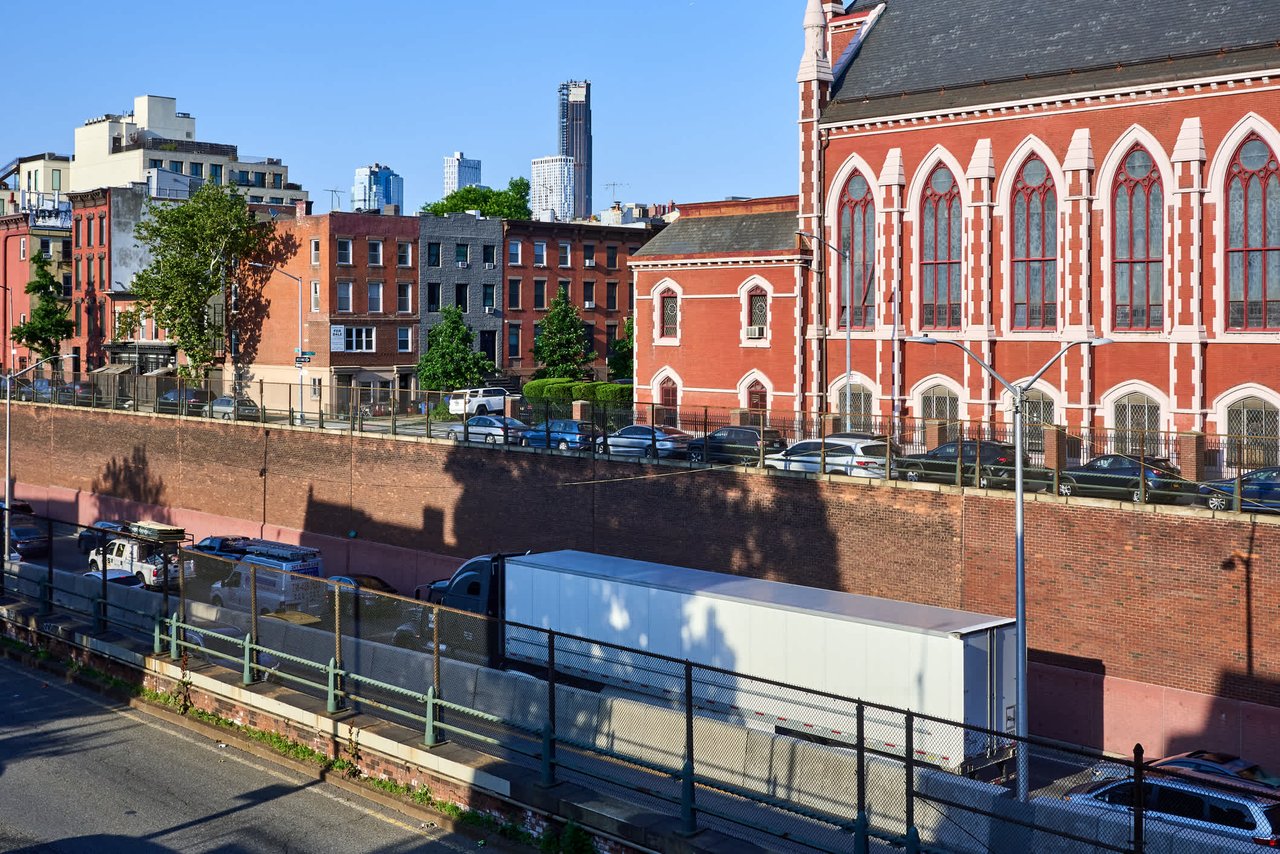
The Carroll Gardens Historic District, designated in September 1973, contains some of the finest examples of the classic Brooklyn brownstone in the borough. The houses are mostly mid-to-late 19th century — Italianate, Greek Revival, and Romanesque Revival rowhouses with original cornices, stoop railings, and woodwork details intact on many buildings. What distinguishes them from their counterparts in Park Slope or Cobble Hill is the setback: because the original street plan was designed around Carroll Park, the homes are set further back from the street, creating the gardens the neighborhood is known for. The additional space between house and sidewalk changes the experience of walking here in ways that are immediately perceptible and harder to articulate — quieter, more private, more settled.
The two parallel commercial spines of Carroll Gardens run about a block apart and serve almost entirely different purposes.
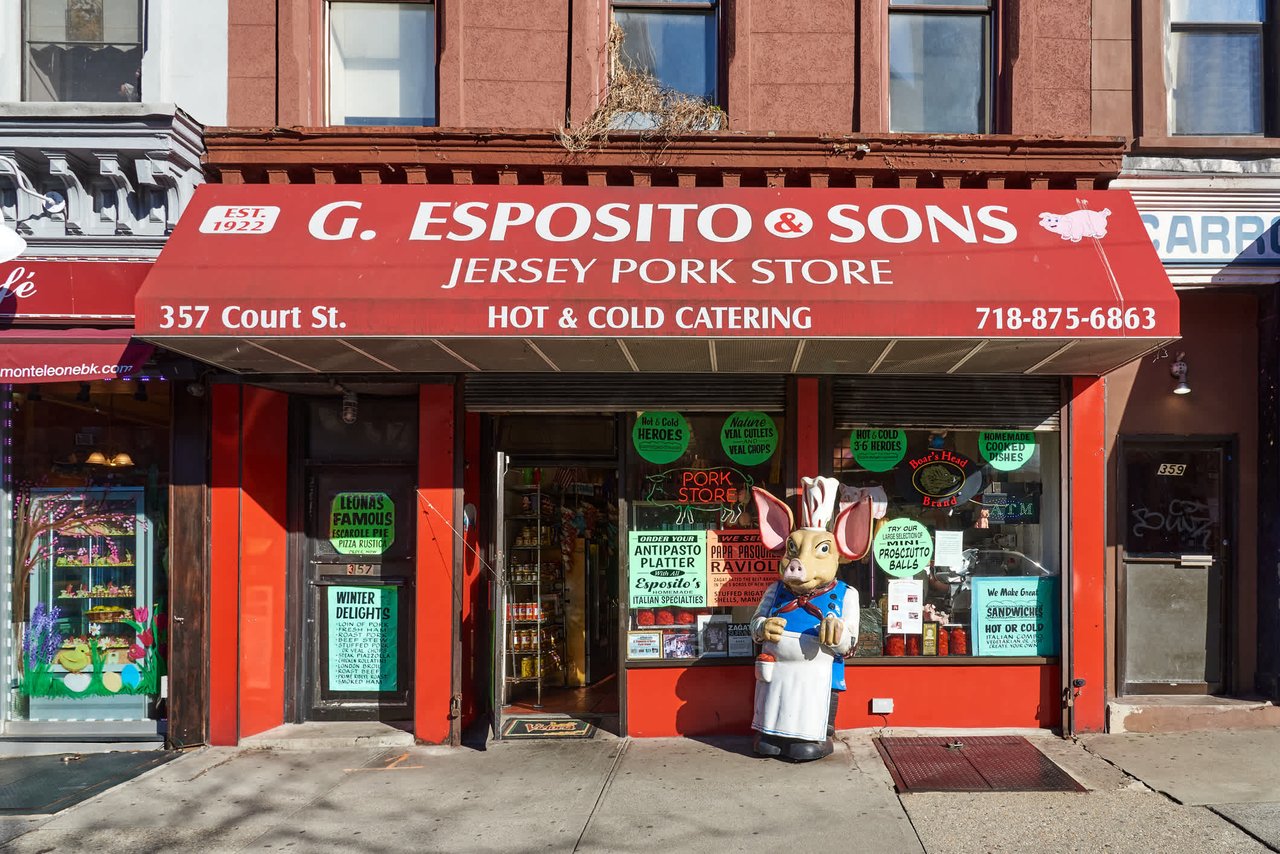
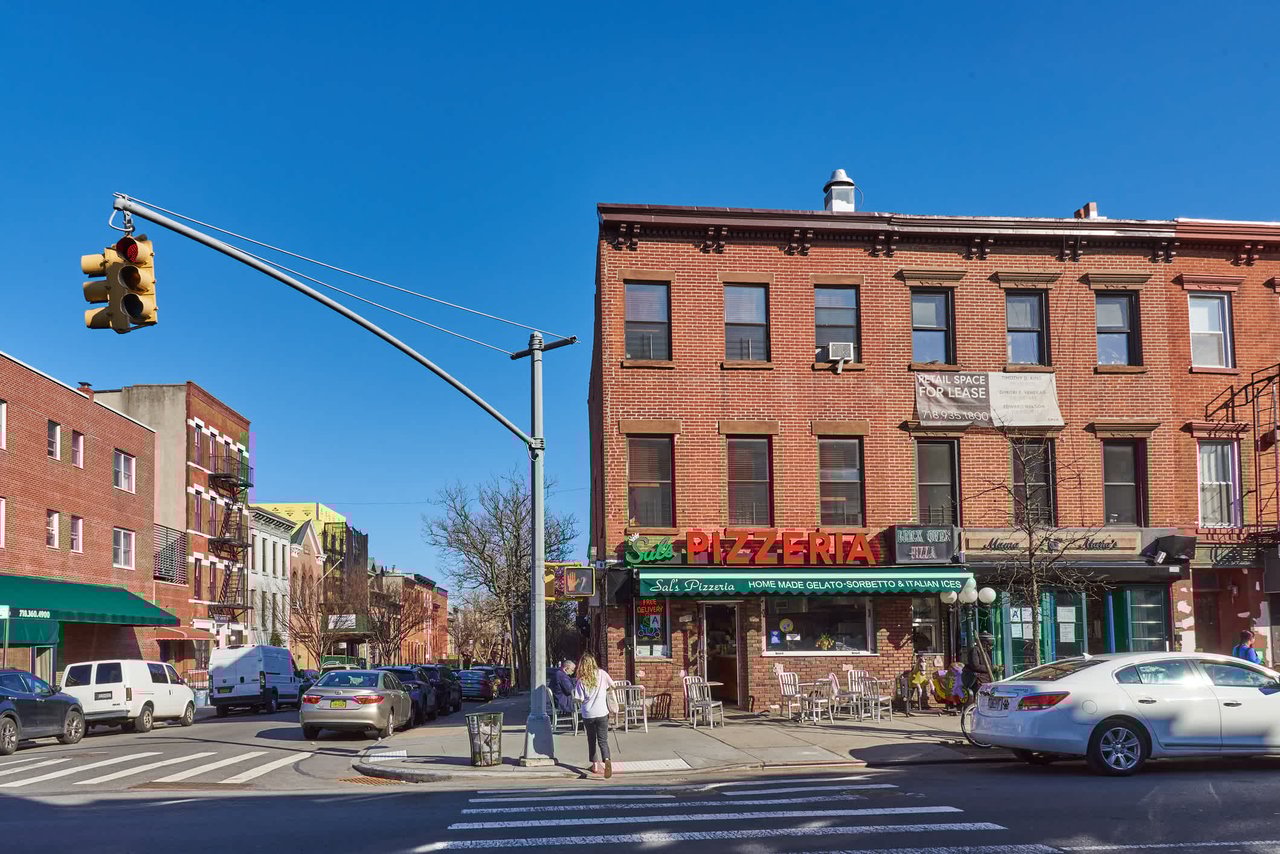
Court Street is a hub for generations-old Italian butcher shops and European bakeries, and the commercial character runs toward the practical and the traditional. Caputo's Bakery, a family-run Italian bakery, has been serving fresh bread and pastries since 1904. Mazzola Bakery has been making lard bread and sesame-seeded loaves since 1928. Esposito's Pork Store has occupied its space on Court Street for decades, supplying the neighborhood's Italian households and the restaurants that cook like them. These businesses are not artisanal reconstructions of an old neighborhood — they are the old neighborhood, still operating.
Smith Street, by contrast, is a hotbed of indie clothing boutiques and showrooms, and critically acclaimed restaurants and cocktail bars commonly referred to as Brooklyn's Restaurant Row. The strip developed in the late 1990s and early 2000s as one of the first restaurant corridors in Brooklyn to attract serious culinary attention, and it has sustained that reputation without losing the neighborhood character that made it appealing in the first place.
The food conversation in Carroll Gardens starts with Lucali and doesn't really end. In a former Carroll Gardens candy store on Henry Street, Mark Iacono crafts pizzas and calzones that celebrate a bygone era of an Italian immigrant neighborhood. The chalkboard menu has only two choices. It's BYOB, cash only, and the line begins forming in the mid-afternoon. The wait is real — it has been since the paper came down from the windows in 2006 — and it produces the particular social phenomenon of neighbors and strangers standing together on the sidewalk for an hour or two, which has the unintended effect of strengthening the community fabric it supposedly strains. The pizza itself justifies most of what's written about it.
Frankies 457 Spuntino, opened in 2004 by Frank Castronovo and Frank Falcinelli, is considered one of the essential Italian restaurants in Brooklyn. The room is small and brick-walled, the garden in back is exceptional in warm weather, and the menu — house-made cavatelli with hot sausage and browned sage butter, meatballs, escarole with white beans — is the kind of simple, confident cooking that becomes a weekly habit rather than a destination occasion. Frank's Wine Bar, next door, allows you to order off the Frankies menu while working through a wine list that takes natural wine seriously without being precious about it.
Court Street Grocers has a cult following for its overstuffed sandwiches — the Tunaberry, with tuna salad, horseradish mayo, white onion, cranberry sauce, and arugula, is one of the more polarizing and beloved combinations in the borough. They also stock gourmet pantry goods, hand-rolled couscous, and fancy tinned fish. Carroll Park is ten minutes away on foot, which makes it the city's best lunch destination for anyone who plans ahead.
Buttermilk Channel on Court Street does elevated American comfort food — think fried chicken and waffles, thoughtfully sourced and carefully prepared — with a warmth that matches the neighborhood's disposition rather than straining for distinction. Ugly Baby, on Smith Street, is the neighborhood's most talked-about recent addition: a small, no-reservations Thai restaurant serving intensely spiced southern Thai dishes — khao soi, fermented fish curries, green peppercorn stir-fries — that bear little resemblance to the Thai food available in most of the city and have earned it a devoted and somewhat obsessive following.
Cafe Spaghetti's backyard is the neighborhood's summer gathering place, and its sister restaurant Swoony's handles the indoor season — an American bistro finished in nautical blue with old photos and fine china, serving creamed spinach, wedge salads, and a double patty burger with thousand island dressing. Brooklyn Farmacy and Soda Fountain, occupying a beautifully preserved old pharmacy on Henry Street, does egg creams, elaborate sundaes, and ice cream sandwiches in a room that looks like it hasn't changed since 1952 — which is more or less the point.
Carroll Park is one of Brooklyn's oldest parks, built in the 1840s. It's not large — roughly two city blocks — but it functions as the neighborhood's living room: bocce courts, a dog run, basketball, playgrounds, and summer movie nights that draw the full cross-section of residents who live on the surrounding streets. The park's scale matches the neighborhood's scale, which is one of the things that makes it work. It's not an amenity to be visited. It's a place where people already are.
Carroll Gardens stands as a testament to old-school Brooklyn while simultaneously showcasing the borough's brownstone boom. The neighborhood has retained its small-town feel, fostering an intimate community where residents are likely to know their neighbors, mail carriers, and local butchers. That description holds up on the ground. Carroll Gardens has a block-association culture, an active school community, and a resistance to the kind of rapid turnover that characterizes more transient Brooklyn neighborhoods. People arrive and tend to stay.
The Lucali owner, who has lived in the neighborhood his entire life, put the neighborhood's transformation plainly: "There are still people here that I was in kindergarten with that I still see on a daily basis, but for the most part mostly everybody's gone. Storefronts once home to old-fashioned Italian eateries now house boutique dry cleaners and natural wine stores." That tension — between the neighborhood it was and the neighborhood it is — runs through Carroll Gardens in a way that's more legible here than in places where the transition happened faster and more completely. The Italian bakeries are still open. So are the natural wine bars. The people who chose to stay exist alongside the people who chose to arrive, and the result, most days, feels less like displacement than like layering.
Carroll Gardens is served by the F and G subway lines, connecting to Manhattan in roughly 20 to 25 minutes. The F train at Smith-9th Streets and Carroll Street are the primary stops. The G train connects to Park Slope, Williamsburg, and Greenpoint without requiring a trip into Manhattan. The neighborhood is walkable to Cobble Hill, Boerum Hill, and Red Hook, and Citi Bike has good coverage along the main corridors. For a Brooklyn neighborhood with this level of residential character and architectural quality, the transit picture is strong.
There's plenty to do around Carroll Gardens, including shopping, dining, nightlife, parks, and more. Data provided by Walk Score and Yelp.
Explore popular things to do in the area, including Teodoor Tailor, and Music Together of Cobble Hill/Carroll Gardens.
| Name | Category | Distance | Reviews |
Ratings by
Yelp
|
|---|---|---|---|---|
| Shopping | 0.29 miles | 18 reviews | 4.2/5 stars | |
| Active | 0.69 miles | 0 reviews | 0/5 stars | |
|
|
||||
|
|
||||
|
|
||||
|
|
||||
|
|
||||
|
|
19,146 people live in Carroll Gardens, where the median age is 40 and the average individual income is $107,456. Data provided by the U.S. Census Bureau.
Total Population
Median Age
Population Density Population Density This is the number of people per square mile in a neighborhood.
Average individual Income
With over a decade of expertise in Manhattan and Brooklyn, Brandon Mason looks forward to providing you with a real estate experience that is second to none. Feel free to explore our website, and contact Brandon with any questions you may have.
Let's Connect